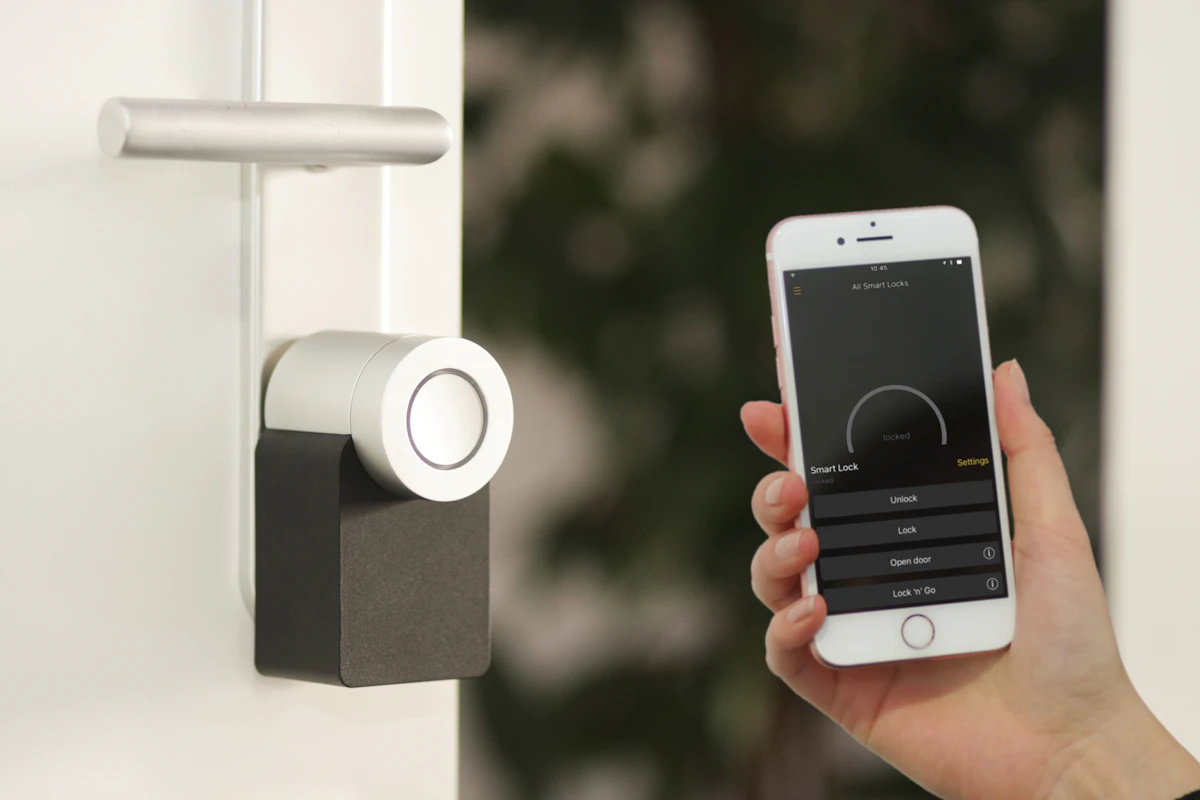
Cameras, sensors and doors
IoT & Connected Devices: IoT and connected devices means cameras, access control, sensors and gateways installed on a network built for them: cabled and powered where they sit, on their own network segment, with alerts that reach a named person and dashboards that put readings into the systems the business already uses.
Internet of things (IoT) projects in Dubai succeed or fail on basics. A connected device is a small computer that somebody screwed to a wall. It needs a network, power, a route to the outside world and a person who gets told when it stops. Most IoT disappointment traces back to one of those four rather than to the device.
Listonics works at all four layers: the cabling and segmented network underneath, the devices themselves supplied and installed, the dashboards and integrations that turn readings into something a manager acts on, and firmware or gateway work where nothing off the shelf fits.
There is a fifth layer specific to the UAE. Delivering an IoT service here requires registration, and TDRA operates a registration service for Internet of Things services that issues an approval certificate. What it asks you to submit is a network connection diagram and, where they exist, security assessments. Our IoT solutions page covers that process in detail.
Device security follows the same baseline as the rest of our work, against the OWASP Top Ten where a device ships its own web interface. Low-power building devices are usually Thread, maintained by the Thread Group, and site-wide sensing is usually LoRaWAN, governed by the LoRa Alliance.
Proof, not promises
Real reviews from Trustpilot and Google, word for word. Google rating 5.0 from 5 reviews, checked 2026-10-17.
Best team I’ve ever hired. All in one place.
As a construction company, we have a lot to manage, so finding one team that can handle our IT and digital requirements has been really helpful. Listonics has supported us with office networking, cybersecurity, website development and SEO. Their team knows what they’re doing and has been easy to work with. We no longer need to coordinate with different companies for every requirement, which saves us time and effort. Overall, it’s been a good experience, and we’re happy to have them supporting our business.
We needed a custom ERP and HR system…
We needed a custom ERP and HR system for our business, along with a new website, and Listonics helped us with all three. The team was approachable, listened to what we wanted and made the process easier than we expected. We could discuss changes directly with them, which made a big difference. It was also convenient having one team handle everything instead of dealing with multiple companies. Overall, we’re happy with how things turned out and glad we chose them.
Listonics projects run from AED 2,500 to AED 30,000 as a fixed scope; support is a fixed monthly fee with response times written into the agreement. The IT support cost guide and managed IT pricing guide set out how the numbers are built.
What we get called in to fix
- Cameras and door controllers sharing one flat network with the file server and the accounts machine, so a device shipped with a default password becomes a route into the business.
- A sensor project where the readings arrive in a vendor portal nobody has logged into since handover, so the first anyone hears of a problem is the damage.
- A switch chosen on port count rather than power budget, so the last few cameras reboot in a loop once everything is plugged in.
- Door hardware with no stated behaviour on power loss, which gets discovered during the first power cut rather than during the design.
- Devices commissioned by whoever installed them, with credentials nobody wrote down, so two years later nothing can be reconfigured without factory resetting the lot.
Who needs this
Offices, warehouses, clinics and sites adding cameras, access control or environmental and leak sensors, and anyone whose devices sit on the staff network with nobody told when one goes offline.
What an IoT project covers:
- A site visit first, because device placement, power and radio behaviour cannot be judged from a floor plan.
- Cabling and power over Ethernet to anything that will sit still and matter, which is most cameras and door hardware.
- A separate network segment for devices, with explicit rules about what they are allowed to reach.
- Devices supplied and installed: IP cameras, access readers and controllers, environmental and leak sensors, gateways.
- An alert path that reaches a named person, escalates when nobody answers, and survives the outage it is reporting.
- Dashboards and integrations built in house, so readings land in Microsoft 365 or your own system rather than a vendor portal.
- Documentation: what is installed where, on which network, and who holds the credentials.
Off-the-shelf first, custom hardware last
We have developers who write firmware and will build a gateway or a board when a project genuinely needs one. We will also tell you when it is the wrong answer, which is most of the time, because custom hardware is a commitment to maintaining it for years. If we propose building something, the proposal says who maintains it.
What is in scope, and what is not
In scope: a site visit before anything is specified, because placement, power and radio behaviour cannot be judged from a floor plan. Then cabling and power over Ethernet to anything that will sit still, a separate network segment with explicit rules about what devices may reach, the devices themselves supplied and installed, and an alert path that reaches a named person, escalates when nobody answers, and survives the outage it is reporting. Dashboards and integrations land readings somewhere people already work rather than in another portal. Low-power building devices are usually Thread, maintained by the Thread Group; site-wide sensing is usually LoRaWAN, governed by the LoRa Alliance. Device web interfaces are checked against the OWASP Top Ten. Everything is documented, and the credentials are handed to you.
Not in scope: we are not a monitoring company and not a guarding company. We build the alert path and prove it reaches you, but nobody at Listonics watches your cameras or responds to your alarms, and anyone who needs that should contract a licensed security provider for it. The TDRA registration for an Internet of Things service is also yours to submit rather than ours: we produce the network connection diagram it asks for, and the IoT solutions page sets out the process. Structural and civil work, and anything requiring a specialist contractor's licence, sit outside what we take on.
How pricing works
Quoted as a fixed scope after a site visit: devices, cabling and power, the device network segment, installation and any dashboard or integration work, each itemised. Projects at Listonics run from AED 2,500 to AED 30,000 depending on requirement.
How implementation works
- Survey, a site visit, because placement, power and radio behaviour cannot be judged from a floor plan.
- Network, cabling and power over Ethernet where devices sit, on a separate network segment.
- Install, devices supplied and installed, with an alert path that reaches a named person.
- Integrate & document, readings into Microsoft 365 or your own system, and a record of what is installed where.
What to compare when choosing a provider
- Is there a site visit before a device list is quoted?
- Do the devices sit on their own network segment?
- Who is alerted when a device goes offline, and what happens if they do not answer?
- Do readings land in your own systems or only in a vendor portal?
- Who holds the device credentials and handles firmware updates?
- Is UAE registration of the IoT service addressed where it applies?
Planning this for your office? Read our in-depth guide: Choosing between Wi-Fi, LoRaWAN and Thread for an office sensor project (11 min read). Also: Putting cameras, door access and sensors on one network without breaking it · Do you have to register an IoT service with TDRA, and what does it involve?.
See also CCTV and access control installation, with our SIRA-approved partner · smart farm and greenhouse IoT.
Frequently asked questions
Quite possibly. TDRA runs a registration service for Internet of Things services that gives you an approval certificate. It is aimed at companies and government entities, and you must be licensed locally or have a legal representative in the country. Sort your position out early, because the document they ask for is a network diagram.
Usually, and it is often the better outcome. Existing cameras, readers and sensors can normally be moved onto a properly segmented network, secured, documented and integrated into something useful. Replacing working hardware is a last resort rather than an opening suggestion.
It comes out of the site visit rather than a brochure. Broadly: cable anything that will not move, low-power mesh inside a building, long-range radio across a yard or compound, cellular for anything mobile. Most real sites end up using more than one.
That is a design decision rather than an accident, and it belongs in the scope document. Readings can buffer locally and forward when the line returns, alerts can fail over to a cellular path, and door hardware needs an explicit answer about whether it fails secure or fails open.
Between AED 2,500 and AED 30,000 depending on the number of devices, how much cabling is involved and whether software is built on top. Anything larger is split into phases you approve one at a time, and the site visit comes before any number.
No. We design and build the alert path, test that it reaches a named person and escalates when it is ignored, and document how it behaves. Watching a camera feed and responding to an alarm is licensed security work and belongs with a licensed provider. We would rather say so plainly than let an alerting system be mistaken for a manned service.
You do. The registration is made by the company or government entity delivering the service, on the condition that it is licensed locally or has a legal representative here, so it has to be in your name. The document it asks for is a network connection diagram, which we produce as part of the work, along with any security assessment that exists.
You do, and they are written down before we leave. Every device, which network it sits on, where it is physically installed and who holds its credentials goes into the documentation. The test of a good handover is whether a different engineer could pick it up in two years, which is the opposite of how most device installs end.
Written by Srinivasan Ramachandran, Founder, Listonics · Last reviewed October 30, 2026